Spare Spoons Kitchen
Reverse-Seared Ribeye Steak
The Showroom · Steakhouse at Home · Serves 2

Reverse-Seared
Ribeye Steak

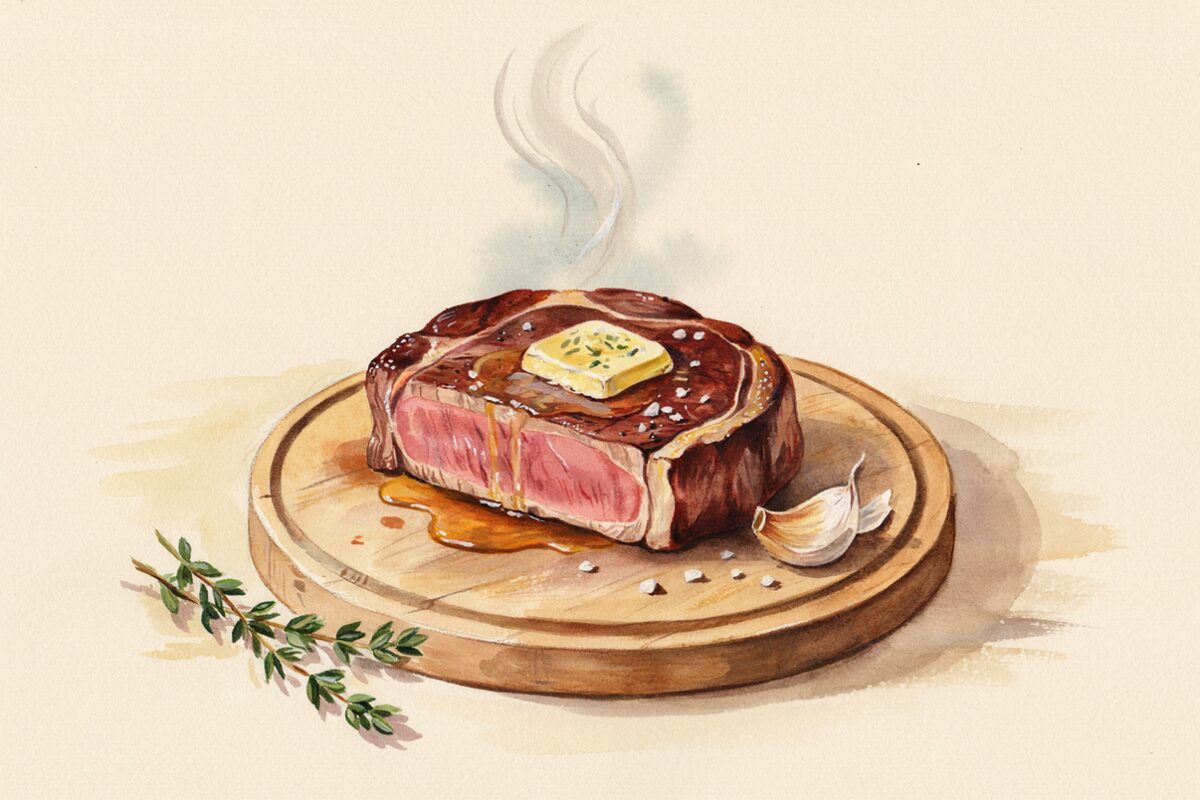
The most forgiving way to a perfect steak: a low oven brings it evenly to temperature, then a blistering cast-iron sear builds the crust — rosy edge to edge, no grey band, every time.

40 min active 45 min+ dry-brine (optional) Oven + sear method
Spoon cost
Time ●●○○○ Some Doing
Gluten-Free
Fewer ingredients, shortcut steps — the same dish, less to track.
Steaksamounts scale to match
2
🍽️ Build a meal around this

Complete dinners built around this dish — pick how much of a project you're in the mood for. Every dish is on this site, and the whole menu goes to the Menu Planner in one tap.

Steak Night, No Fuss

Steak and a potato, which is all steak has ever really needed. Nothing here competes with the ribeye for your attention or your oven — the potato bakes alongside it, the broccoli is four minutes in the microwave, and the butter and the dessert were both made days ago.

  • The centerpieceReverse-Seared Ribeye Steak — the one you're already here for.
  • On the steakCompound Butter (Steakhouse Butter) — the whole sauce course, made last week. A coin melts over the hot steak into something glossy while it rests.
  • The potatoPerfect Baked Potato — it bakes at 425°F and the steak wants 250°F, so the potato goes first and waits in foil. If you have an air fryer, use that method instead and the whole problem disappears.
  • Something greenSimple Broccoli, Any Way — the microwave method, in the four minutes the steak is resting. Not the roast method: the oven is busy being 250°F for the steak. Put a coin of the compound butter on this too.
  • DessertCherry Sauce for Ice Cream — warm it and pour it over ice cream from the carton. No oven, no timing, no second thought.

To pour: A red with real tannin — Cabernet Sauvignon or Malbec. Tannin scrubs the fat off your palate between bites, which is why steak-and-Cab is a cliché that happens to be true; a Chilean or Argentine bottle under $15 does the job honestly. Not a wine night? A cold lager cuts the richness just as well.

The order of operations

The oven: Two temperatures, one oven, and the potato needs the hot one for longest — so the potato bakes first at 425°F and rests in foil (it holds heat for ages) while the oven comes down to 250°F for the steak. It goes back in at the end to re-crisp. Or sidestep the whole dance: bake the potato in the air fryer and let the oven belong to the steak.

  1. Days aheadMake the compound butter and roll it into a log. It keeps two weeks in the fridge, three months in the freezer — so this step is really "some evening you felt like it."
  2. 1½ hours outOven to 220°C / 425°F. Scrub, dry, oil and salt the potatoes; straight onto the rack. Take the steaks out of the fridge, pat dry, and salt them — they season and take the chill off while the potato bakes.
  3. 45 min laterPotato out (a skewer slides in with no resistance). Wrap in foil and leave it on the counter — a baked potato holds its heat far longer than you'd think. Drop the oven to 120°C / 250°F, propping the door open a few minutes to bring it down fast.
  4. Steak inSteaks onto a rack over a sheet pan, into the 250°F oven. Roughly 25–45 minutes — but the thermometer decides, not the clock. Pull at 115°F for medium-rare.
  5. 10 min beforeCast-iron skillet on high — give it a full 5 minutes. Crank the oven back to 425°F and put the potato back in, unwrapped, to re-crisp the skin.
  6. 5 min beforeSteaks out at their pull temp. Pat the surfaces bone-dry, then sear 45–60 seconds a side, add butter, garlic and thyme, and baste. Steaks onto a board to rest.
  7. While they restBroccoli in the microwave, 4 minutes. Potato out and split. This is also when the resting does its work — don't skip it.
  8. ServeA coin of compound butter on the steak, one in the potato, one on the broccoli. It's the whole sauce course and you made it last week.
  9. AfterWarm the cherry sauce in a small pan and pour it over ice cream. Three minutes, one pan.

The Steakhouse Dinner

The full chophouse: a cold, crisp starter, a real mash, popovers, and a dessert sharp enough to cut through all of it. It runs as two courses — salad and popovers first, steak after — which isn't ceremony, it's the only way one oven can do both. Steakhouses bring the bread out first for the same reason.

  • The centerpieceReverse-Seared Ribeye Steak — the one you're already here for.
  • To startPear, Apple & Fennel Salad — shaved ice-cold and dressed sharp. It's the cold, crisp thing that makes the rich thing land better; steakhouses open with a wedge for exactly this reason.
  • On the steakCompound Butter (Steakhouse Butter) — go for the blue cheese & chive variation here. Unbeatable on beef, and it's the steakhouse move.
  • The potatoMashed Potatoes — Stephan's garlic version, cloves simmered soft in butter and cream. Holds warm over a pan of hot water while you sear.
  • Something greenSimple Broccoli, Any Way — the steam method, on the stovetop. The roast method wants 425°F and the oven is at 250°F for the steak; steaming keeps it off the oven's schedule entirely.
  • BreadClassic Popovers — Yorkshire pudding by another name, and it was invented to sit next to beef. They bake at 450°F, so they can't share the steak's oven — which is why they come out first, with the salad.
  • DessertLemon Bars — after a meal this rich, you want sharp, not more richness. Made the day before, straight from the fridge.

To pour: Cabernet Sauvignon again, or a Bordeaux blend if you're spending a little more — the blue cheese butter and the ribeye's fat can both take the tannin. A Malbec or a Northern Rhône Syrah is the same idea with more pepper to it.

The order of operations

The oven: The popovers need 450°F and the steaks need 250°F, and an oven cannot be talked into both. So the popovers go first and get eaten hot with the salad as a first course, and the oven then comes down for the steaks while everyone's still at the table. The broccoli stays on the stovetop and out of the argument.

  1. The day beforeLemon bars and compound butter (the blue cheese & chive variation). Dry-brine the steaks: salt them and leave them uncovered on a rack in the fridge overnight — the single best thing you can do for the crust.
  2. AfternoonGarlic mash, held warm in a bowl over a pan of barely-simmering water. Mix the popover batter and leave it out — it wants room-temperature ingredients anyway, so this is the rare case where sitting around is the recipe.
  3. 1 hour outSteaks out of the fridge. Oven to 230°C / 450°F with the popover pan inside — a screaming-hot pan is half of what makes them climb.
  4. 40 min outBatter into the hot pan, popovers in. 20 minutes at 450°F, then drop to 180°C / 350°F for 17 more. Do not open the door — that's the other half.
  5. First coursePopovers out and onto the table immediately, while you shave and dress the salad. Sit down and eat it. Meanwhile: oven down to 120°C / 250°F, door propped a few minutes to hurry it along.
  6. Steaks inOnce the oven reads 250°F, steaks in on a rack over a sheet pan. That's 25–45 minutes of nothing to do — which is exactly how long a first course takes. Pull at 115°F for medium-rare.
  7. 10 min beforeCast iron on high, a full 5 minutes. Broccoli trimmed and ready by the stove. Plates somewhere warm.
  8. 5 min beforeSteaks out, patted bone-dry, seared 45–60 seconds a side, then butter, garlic, thyme, and baste. Onto a board to rest — and hold each steak on its fat edge with tongs for a few seconds while you're there.
  9. While they restBroccoli on the stovetop, steam method — about 5 minutes, which is the rest. Loosen the mash with a splash of hot cream if it's tightened up.
  10. ServeSteak sliced against the grain, pan butter poured over, a coin of the blue cheese butter melting on top. Lemon bars come out of the fridge whenever someone asks.

Surf & Turf, Restaurant Plate

Scallops to open, ribeye over a silky purée, and cherries set on fire at the table. This is a real evening's cooking — two hard sears in the same pan and a dessert with a flame in it — so it wants a night you're up for it, and one other person to pour the wine.

  • The centerpieceReverse-Seared Ribeye Steak — the one you're already here for.
  • To startSeared Scallops with Brown Butter, Lemon & Capers — the same cast-iron pan, the same hard sear, twenty minutes earlier. Serve two or three each; this is a first course, not a second dinner.
  • The bedCauliflower Purée — what makes it read as a restaurant plate instead of a nice steak. Spoon it down, lay the sliced ribeye on top, pour the pan butter over. It reheats, so make it in the afternoon.
  • On the steakCompound Butter (Steakhouse Butter) — the roasted-garlic variation: mellow and sweet, so it flatters the purée instead of shouting over it.
  • Something greenSimple Broccoli, Any Way — roasted, the one plain thing on a plate of rich ones. It roasts at 425°F before the oven comes down for the steaks, and holds covered — roasted broccoli is fine twenty minutes later, and this is the only window it gets.
  • BreadNo-Knead Everyday Bread — for the brown butter left behind from the scallops, which you are not going to want to leave in the pan. It needs an overnight rise and a 475°F oven, so it's baked in the morning — which is also when it's best, an hour or two out of the oven.
  • DessertCherries Jubilee — lit at the table, over ice cream. It's theatre, it takes five minutes, and it's the reason people remember the meal.

To pour: A ribeye this rich wants a big red — Cabernet, a Napa blend, or a Syrah. The scallops technically want a white, and if you want to do it properly, open a cold Chablis or a dry Champagne for the first course and switch. Only doing one bottle? Pour the red, and nobody at the table will file a complaint.

The order of operations

The oven: Three different oven temperatures live in this menu — 475°F for the bread, 425°F for the broccoli, 250°F for the steaks — and an oven only comes down slowly. So they run hottest-first and spread across the day: bread in the morning, broccoli in the late afternoon, then the oven settles to 250°F for the steaks and stays there. Nothing after that needs it.

  1. The night beforeMix the bread dough — 2 minutes with a spoon, then it sits out overnight and does the work itself. Dry-brine the steaks uncovered on a rack in the fridge.
  2. MorningBake the bread (475°F, Dutch oven). It's done by breakfast and at its best a couple of hours later — bread out of the oven an hour ago is the point, not a compromise.
  3. AfternoonCauliflower purée (reheats with a splash of milk). Compound butter, roasted-garlic variation. Pit the cherries. Pull the scallops' side muscles and leave them uncovered on paper towels in the fridge — drying them out is doing you a favor.
  4. 2 hours outSteaks out of the fridge. Oven to 220°C / 425°F.
  5. 1¾ hours outRoast the broccoli — about 20 minutes. Out, covered, on the counter. This is its only slot; the oven is about to become 250°F and stay there.
  6. 1½ hours outOven down to 120°C / 250°F, door propped for a few minutes to bring it down. Then steaks in on a rack over a sheet pan. Pull at 115°F for medium-rare — 25–45 minutes.
  7. Steaks outAt their pull temp, out onto the counter, loosely tented. They wait here, and that's fine — reverse sear is built for exactly this. Cook low, hold, fire to order is how a steakhouse does it, and your first course is about to happen.
  8. First courseCast iron screaming. Sear the scallops, brown the butter, and get them to the table the second they're done — scallops wait for no one. Bread on the table for the brown butter. Reheat the purée gently while people eat; warm the plates.
  9. Second courseWipe the pan, get it ripping hot again, pat the steaks bone-dry, and sear 45–60 seconds a side with butter, garlic and thyme. Rest 5–10 minutes.
  10. ServePurée spooned down first, sliced ribeye laid on top, pan butter poured over, a coin of roasted-garlic butter melting into it. Broccoli alongside.
  11. AfterClear the plates, then cherries jubilee at the table, over ice cream. Five minutes, and it's the part they'll talk about.
Units

Ingredients

The oven cooks it; the pan only browns it. Use a thermometer, and get the pan screaming hot. Reverse sear works because the low oven brings the whole steak evenly to just below your target — then a fast, blistering sear builds the crust without overcooking the inside. Two things make or break it: pull the steak from the oven at the right internal temperature (see the doneness chart in the notes — guessing by the clock will fail you), and pat the surface bone-dry, then sear in a truly ripping-hot pan so it browns in seconds instead of steaming grey.
Get the pan ripping hot, then leave the steak alone. For a thinner steak, skip the oven and go straight to a hard sear. Pat it bone-dry, lay it in a smoking-hot pan, and don't move it until a deep crust forms — about 3 minutes — before you flip. A thermometer still keeps it honest: pull at 130°F for medium-rare and let it rest.

Method

    Cook's notes

    Doneness by temperature — this is the whole game. Pull the steak from the low oven at the first number; the sear and the rest carry it up to the second.
    Rare: pull 105°F → 120–125°F final
    Medium-rare (the sweet spot): pull 115°F → 130–135°F
    Medium: pull 125°F → 140–145°F
    Medium-well: pull 135°F → 150–155°F
    Carryover keeps climbing after the sear, so if you're between two, pull a touch early. A good instant-read thermometer is what makes this foolproof — see the Tool Kit.

    Why reverse sear beats a straight sear on a thick steak. A hot pan alone overcooks a grey ring under the crust before the center is done. The gentle oven brings the whole steak evenly to just-under-target first, so the sear only has to brown the outside — you get an edge-to-edge rosy interior and a better crust, with far more margin for error.

    A dry surface is the secret to the crust. Browning can't start until surface moisture boils off, so patting the steaks bone-dry before searing — and, better yet, dry-brining uncovered in the fridge — is what gives you deep color in under two minutes instead of a pale, steamed exterior.

    This method is for thick steaks (1¼ inches and up). Thinner steaks don't have enough interior to protect, so they're better with a straight hot-pan sear — that's the Simplify this recipe version.

    Bone-in or boneless? Both work. Bone-in (a cowboy or tomahawk ribeye) looks dramatic and the bone insulates slightly, so it may run a few minutes longer in the oven; boneless is easier to sear evenly and to slice. Go by temperature either way.

    Dress it up: a coin of compound butter melting over the top, or a quick pan sauce from the drippings — deglaze with a splash of red wine or stock, swirl in a knob of cold butter.

    Cook's notes

    This straight sear is best for thinner steaks (¾–1 inch). For thick steaks (1¼ inches and up), the full reverse-sear method gives a better edge-to-edge result.

    Use a thermometer: pull at 130°F for medium-rare — carryover brings it to about 135°F as it rests.

    Easier, if you like

    • No cast-iron pan? Any heavy stainless skillet that can take high heat works — just get it genuinely hot and don't crowd it. Avoid nonstick; it can't take the heat a good sear needs.
    • Grill instead: reverse-sear on the grill by cooking the steaks over the cool side (lid down, ~250°F) to your pull temp, then searing over the hot side for the last minute or two a side.
    • Skip the oven for a weeknight steak: a straight hot-pan sear is faster and perfect for thinner cuts — that's the Simplify version below.
    Gluten-free as written; dairy-free and cut swaps

    Gluten-free: nothing to change — steak, salt, pepper, and butter are all naturally gluten-free.

    Dairy-free: skip the butter baste and finish the sear with a little more oil, or use ghee (clarified, so most people who avoid dairy tolerate it) or a plant butter.

    Other cuts, same method: a New York strip behaves just like ribeye here. Leaner cuts (filet/tenderloin, top sirloin) reverse-sear well too, but pull them about 5°F earlier — with less fat they dry out faster. You can even reverse-sear a small single-bone rib roast this way; it just needs longer in the oven.